



Description
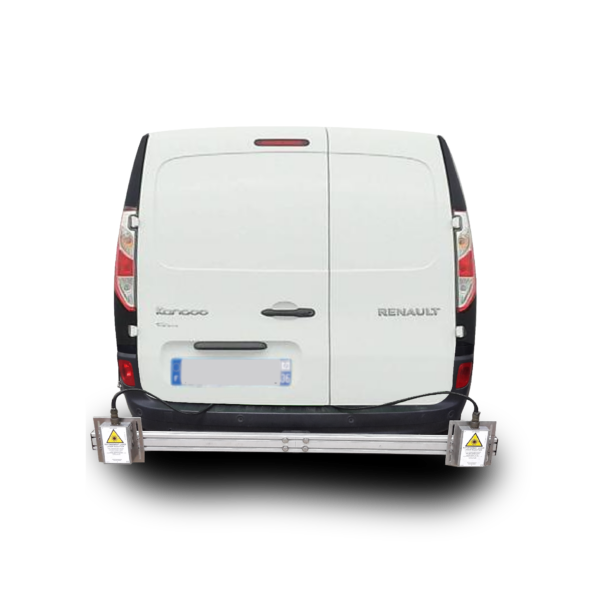
The APL system -Longitudinal Profile Analyzerenables continuous measurement of the longitudinal evenness of road pavements, runways and, more generally, any roadway used by motor vehicles, whatever the pavement structure and type of surfacing.
The measurement is based on a survey of the pavement’s longitudinal profile, in one or two traces. Analysis of this profile enables the uni characteristics of the pavement surface to be deduced.
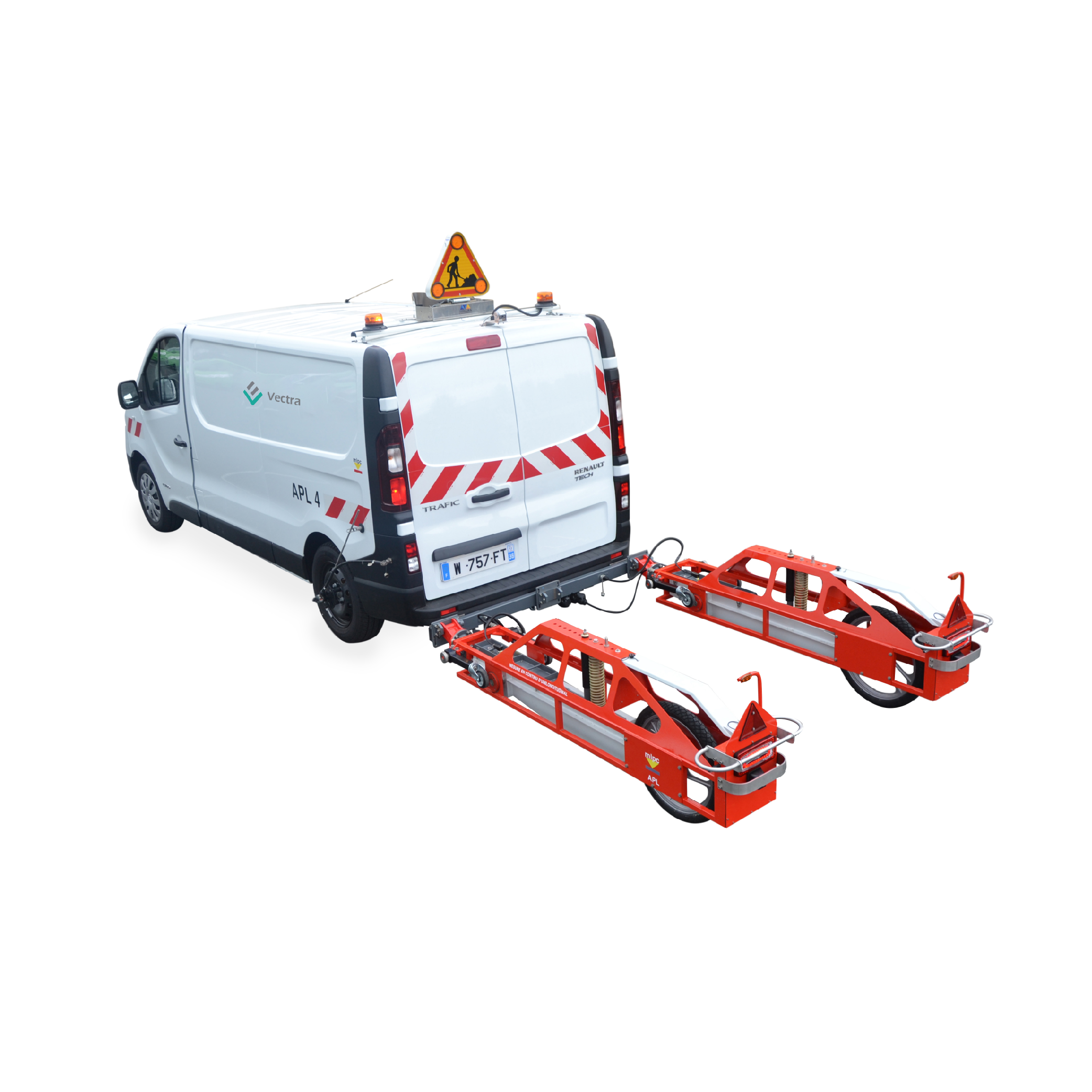
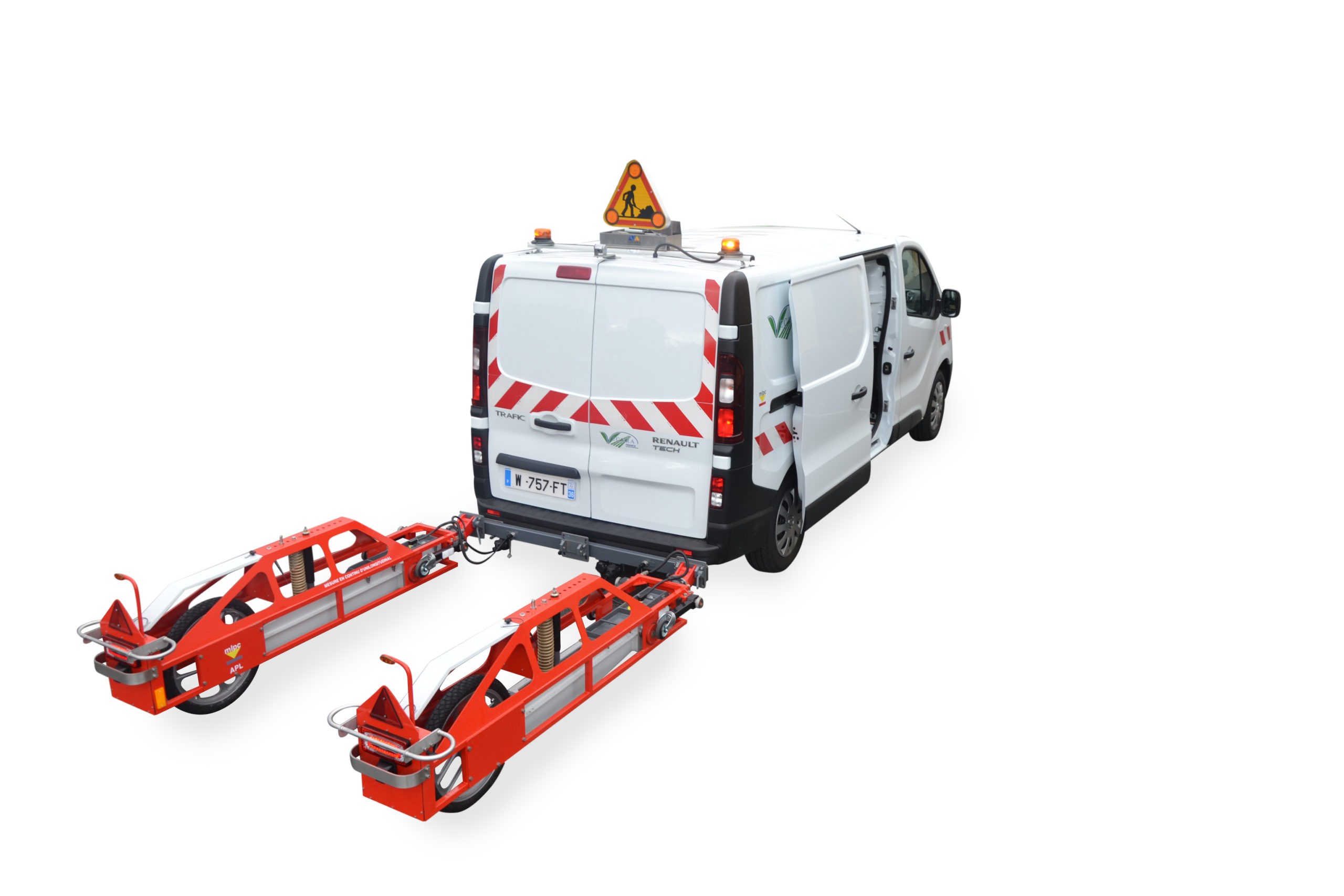
The sensor consists of a trailer connected to a towing vehicle via a universal joint. Profile unevenness is translated into electrical signals by means of a double transformation.
The trailer represents a “quarter-vehicle” unit whose wheel axle permanently follows the road profile thanks to its ballasted chassis and adapted suspension. Vertical movements E of the wheel axle translate into angular deflections ß of the wheel arm.
A low-frequency pendulum provides the inertial angular deflections that are measured and translated
into profile elevation values. The pendulum’s decoupling function minimizes the effects of vertical excitations from the towing vehicle.
The result of the measurement is the longitudinal profile of the pavement of the roadway, in one or two traces generally located in the treads of the traffic lanes. The system, comprising one or two trailers, is controlled and managed by specialized acquisition electronics on board the towing vehicle.
It produces files of digital values amplitudes of profile gradients measured with a longitudinal step of 0.05 m.
The wavelengths contained in the profile measured by APL depend on the measurement speed. At a nominal speed of 72 km/h, APL records wave lengths between 0.7 m and 50 m without distortion or attenuation.